
SENTENCING ARGUMENTS · DAY 10
Original record by Prison WatchReconstructed reading guide by Child Protection Action Alliance
Tenthtrial hearing
Kaikai citizen-judge hearing record | Wednesday, May 7, 2025
Sentencing arguments are not new testimony by the defendants. Understanding their respective responsibility requires checking the Day 10 prosecution and defense arguments against the two defendants’ original Day 9 questions and answers, item by item.
This page concerns child mistreatment, death and sentencing requests. It reconstructs Prison Watch’s public Day 10 hearing observation record and seven-page PDF; it is not the court’s official verbatim transcript. Prosecution submissions, defense positions, defendants’ final statements and judicial findings are distinct and cannot replace one another. The artistic visual is not evidence either.
Day 10 at a glance
The court moved to sentencing arguments. The prosecution and Liu Cai-xuan’s counsel spoke in the morning. In the afternoon, questions from citizen judges were clarified first, followed by Liu Ruo-lin’s counsel, additional prosecution and defense arguments, and finally the two defendants’ statements.
First clarify four easily confused sets of numbers
- Prosecution, morning: Life for Liu Cai-xuan; 16–18 years for Liu Ruo-lin.
- Prosecution, afternoon clarification: Liu Ruo-lin’s first-stage upper limit was 18 years, with no room for reduction; the explicit answer was “18 years.”
- Liu Cai-xuan’s defense: Mentioned 18 years when discussing comparison cases, but concluded with a recommendation of 16–18 years.
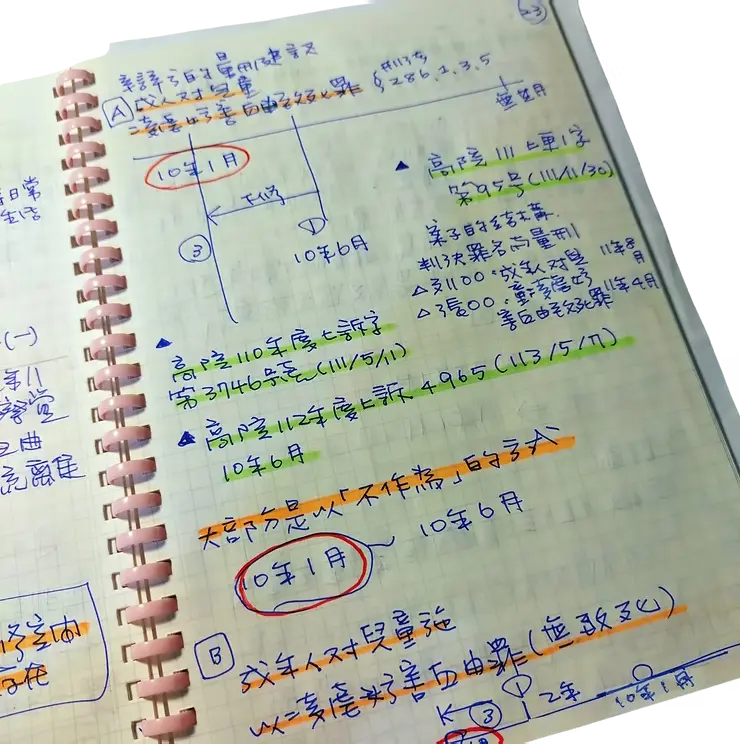
- Liu Ruo-lin’s defense: Maintained a not-guilty position. In the alternative sentencing argument, the source first gives 10 years 6 months for the fatal offense, then 10 years 1 month in a later summary, and 1 year 6 months for the nonfatal offense. This page preserves the discrepancy rather than choosing one figure.
From morning submissions to the 15:14 conclusion
- Prosecution sentencing arguments
The prosecution addressed offense circumstances, life and conduct, post-offense attitude, reintegration and general deterrence. The presiding judge conveyed the citizen judges’ wish to avoid repeating arguments about the facts.
- Recess; court resumed at 10:39
Citizen judges asked three questions: why the sentences differed, why Liu Ruo-lin’s range was 16–18 years, and where her first-stage sentence fell.
- Liu Cai-xuan’s defense sentencing arguments
Counsel argued for 16–18 years, citing caregiving difficulties, specific care provided, systemic gaps, no prior convictions, post-offense attitude and prospects of reintegration.
- Proceedings resume · Prosecution clarification
The prosecution described Liu Ruo-lin’s culpability as moderate to high, as a secondary caregiver whose participation included omissions. The first-stage upper limit was 18 years, with no reduction, and 18 years was expressly requested.
- Liu Ruo-lin’s defense sentencing arguments
Counsel used three stages to address life history, personality, emotional dependence, participation and reintegration, while expressly maintaining the not-guilty position.
- Additional prosecution and defense arguments
The prosecution rejected using systemic and personal difficulties as justification. Liu Ruo-lin’s defense asked that the two defendants’ conduct patterns and degrees of participation be evaluated separately.
- Final statements · Hearing concluded
Liu Cai-xuan apologized and said she would accept the punishment due; Liu Ruo-lin said she had nothing to state. The victim participant’s representative requested that the family’s absence during the apology be recorded.
Three sentencing stages | How the parties interpret the same factors
Offense circumstances and culpability-based sentence
Motive, provocation, methods, breaches of duty, participation and the relationship with the victim first define a culpability-based sentencing range.
The prosecution emphasized duration, suffering and general deterrence; the defenses cited caregiving difficulties and differences in participation respectively.Life, conduct and intellectual background
Whether personal circumstances—life history, employment, family, no prior convictions and social functioning—justify adjustment within the first-stage range.
The prosecution saw no basis for reducing either sentence; the defenses cited long employment and life histories.Post-offense attitude and reintegration
Rescue efforts, apologies, religious ceremonies, settlement, willingness to receive treatment, family support and reoffending risk must each be assessed, not merged into a single “remorse” label.
The court still assesses the material’s evidentiary weight and final sentence comprehensively under law.Three parties’ sentencing positions | Who argued what
This is a structured guide to the submissions in court, not conclusions already accepted by the court.
Prosecutor
Liu Cai-xuan: life imprisonmentLiu Ruo-lin: 18 years
- Emphasized almost continuous conduct over 115 days and the child’s fear and suffering.
- Argued that neither defendant’s life, conduct or intellectual factors left room for reduction.
- Invoked special deterrence, general deterrence and maintaining trust in legal norms to support severe punishment.
- Clarified the morning’s 16–18 years to 18 years in the afternoon.
Liu Cai-xuan’s defense
Final recommendation: 16–18 years- Framed motive as a vicious cycle and loss of control amid caregiving difficulties, opposing a reduction to “enjoyment of abuse.”
- Cited basic care, seeking help, no prior convictions, long-term employment and family responsibilities.
- Cited religious ceremonies, admission of guilt, acknowledging mistakes, settlement contacts and rescue efforts for post-offense adjustment.
- Identified adoption handover, training, oversight and support systems as matters for systemic review.
Liu Ruo-lin’s defense
Maintains not-guilty positionAlternative sentencing submissions
- Asked for separate evaluation of the two defendants’ motives, conduct patterns and participation.
- Used life history, suppression and compliance, high emotional needs and conflict avoidance to explain her responses.
- Sought the statutory minimum at stage one and argued for high reintegration prospects at stage three.
- The source first gives an alternative 10 years 6 months for the fatal offense, then 10 years 1 month; it lists 1 year 6 months for the nonfatal offense.
Liu Cai-xuan × Liu Ruo-lin | Comparing responsibility
Eight topics provide 48 links to original Day 9 question-and-answer anchors. A “Return to Day 10” tool appears after entry, allowing comparison between the defendants’ original words and the sentencing submissions.
TopicLiu Cai-xuan | Day 9 wordsLiu Ruo-lin | Day 9 wordsDay 10 reading limits
Admitting and denying responsibility
C15 | Admits restraintC68 | “I caused it”C69 | “It was my fault”
R13 | Says mistaken for an accompliceR17 | Still denies the offenseR18 | Conduct should change
Central disagreementThe parties’ evaluations of responsibility and sentence cannot erase the differences in the defendants’ Day 9 positions.
Caregiving roles and participation
C29 | Kindergarten locationC30 | Three sisters operated togetherC43 | Unlawful methods are not teaching
R08 | Denies leadingR09 | Qualifications and registered providerR13 | Account of the bathtub incident
Role disputeThe prosecution said a secondary caregiver still participated; the defense sought separate evaluation. Neither qualifications nor kinship alone settles the issue.
Motivation, income and stress
C04 | Feared no child placementC09 | Highest-income periodC41 | Feared losing income
R07 | Difficulty expressing herselfR08 | In-laws and work pressureR09 | Quiet in private
Different explanationsStress explains context but does not automatically mitigate sentence or replace assessment of concrete conduct and duties.
Knowledge and perception of injuries
C46 | Feelings in emergency careC47 | Denies contact with doctorC51 | Activity after noon
R03 | Says she saw only partR15 | Doctor explains item by itemR16 | Did not read report closely
Return to evidenceAwareness, detectability and cause of death require medical testimony, images and complete case files, not just words in submissions.
Concealment, lies and deletion
C23 | Untruthful during investigationC25 | Still lied during assessmentC50 | Admits insufficient candor
R05 | Inappropriate messagesR06 | Deleted LINE herselfR16 | Report not closely read
Separate evaluationOne was not candid at several stages; the other admitted deleting messages. Their content, timing and implications for post-offense attitude must not be merged.
Religious ceremony, NT$300,000 and repair
C19 | Says apology was sincereC70 | Source of NT$300,000C73 | Says rites were explained
R01 | Temple head’s accountR02 | Says reason not explainedR21 | Borrowed NT$100,000
Direct discrepancyReligious rites, funds, what was disclosed and repair with the family are separate issues. The representative also requested a note that the family was absent during the apology.
Apology and final statements
C19 | Says apology was sincereC68 | Causing the outcomeC69 | Injury and death
R04 | Regrets not asking moreR17 | Still denies the offenseR20 | “Did not think that much”
Not just one sentenceOn Day 10 one apologized and the other declined to speak. The legal evaluation of silence, denial and remorse cannot rest on an intuitive reading of words alone.
Support and reintegration prospects
C22 | Insurance reserveC26 | Religious faithC64 | No chats with family
R25 | Relationship with sistersR26 | Relationship with sonR29 | Sisters’ interaction
Assessment factorsFamily support, finances and social functioning inform reintegration assessment; they do not prove low risk or guarantee reduction.
Cross-day links locate reading material only. Day 9 is defendants’ questions and answers; Day 10 is prosecution and defense sentencing argument. Neither can replace the other.
Final statements and note on family attendance
Liu Cai-xuan“I am sorry, I feel deeply sorry—to the family, to Child A and to the public. I will face this honestly and accept the punishment I should receive.”
Liu Ruo-lin“I have nothing to state.”
Handwritten hearing notes attached to the source record
The image originally appeared on page 1 of the Day 10 PDF. It shows the compiler’s working hearing notes. It is retained for source context, not treated as an official court transcript or independent exhibit.
Complete sentencing argumentsReconstructed section by section in procedural order
This section uses the seven-page printed PDF as its base, rearranging speakers into left and right dialogue boxes and splitting long numbered submissions into topic cards. PDF line breaks within paragraphs are normalized for layout without changing the source meaning. Differences between the PDF and Prison Watch’s webpage are separately labeled “Webpage supplement,” not mixed into the PDF text layer. This language edition translates the source rather than presenting it as an official transcript.
LeftCourt, prosecution and procedural remarksRightDefense and defendants’ statementsPosition identifies the speaker only; it does not indicate acceptance by the court or a finding of responsibility.
Loading complete sentencing record…
第10日|原始紀錄逐列全文(併入完整紀錄)
本區直接依監所關注小組原始公開頁的表格順序重製,共 6 個表格、7 列。不合併問題、不濃縮回答;原始空白欄位保持空白並明確標示。上方導讀與摘要不得取代本區。
原始表格 01|1 列
原始紀錄左欄
審判長:國民法官在請求釋疑時提出三點。
兩名被告刑度差異那麼的原因?
為何不是16年以下,或18-20年,而是16-18年
劉若琳第一階段的落點,檢察官並沒有說明
檢察官:補充論告後說明
審判長:現在沒辦法說明嗎?什麼意思?辯護人的意見呢?
劉彩萱辯護人:沒有問題。
劉若琳辯護人:沒有說明無法進行。
檢察官:放在補充說明裡。
審判長:現在可以嗎?你們事實及法律辯論部分也是當天劉若琳進行完就進行啊?
→調整成在下午劉若琳辯護人開始辯論前,檢察官先就釋疑三點提出說明。
原始紀錄右欄
原始紀錄回答/右欄空白
原始表格 02|1 列
原始紀錄左欄
檢察官異議:鑑定是「品行」,律師用在「動機」
辯護人:審前手冊有明白說明可採
審判長:怎麼用是辯護權的一部分,請繼續
原始紀錄右欄
原始紀錄回答/右欄空白
原始表格 03|1 列
原始紀錄左欄
對婆婆與前夫極為順從、退讓、壓抑、自我控制、避免衝突
知道前夫有小孩還是決定結婚,放棄幼保專長而接手餐飲店,將親生兒子送回娘家
原始紀錄右欄
對劉彩萱極為順從、退讓、壓抑、自我控制、避免衝突
劉彩萱需要抱怨的時候選擇附和
原始表格 04|1 列
原始紀錄左欄
審判長:過失傷害,還是檢察官起訴法條?
辯護人:接下來會將理解和操作的模型套入各種可能法條
原始紀錄右欄
原始紀錄回答/右欄空白
原始表格 05|2 列
原始紀錄左欄
保護因子(+)
原始紀錄右欄
風險因子(-)
原始紀錄左欄
未有童年不利經驗
重視家庭倫理
社會功能良好
沒有精神病史、酒精或藥物濫用、反社會人格
沒有前科
原始紀錄右欄
壓抑控制
缺乏自我察覺
認知扭曲
道德疏離
原始表格 06|1 列
原始紀錄左欄
審判長:罪責時沒有提,現在不能說
辯護人:那我們提個聲明異議,至少留個紀錄
審判長裁定聲明異議駁回
原始紀錄右欄
原始紀錄回答/右欄空白
Sources, versions and evidentiary limits
Prison Watch, “DAY10 | Wednesday, May 7, 2025: Tenth Trial Hearing,” and its seven-page printed PDF.
View original webpage ↗PDF: 7 pages, 1,366,202 bytes; SHA-256: 03256d3bafe560c2c6c57523bf3997209ccf1157c1a3a2789db17d321499d281. No PDF viewer is embedded on this site.
The prosecution requested 16–18 years in the morning and explicitly 18 years in the afternoon. Liu Ruo-lin’s alternative fatal-offense recommendation first appears as 10 years 6 months, then as 10 years 1 month in a later summary. One additional submission by Liu Cai-xuan’s counsel appears only on the original webpage, not in the seven-page PDF, and is separately marked as a supplement.
A sentencing request is not a judgment; a question’s premise is not a fact; final statements are not the entirety of post-offense attitude. Cross-day comparison is a reading index, not a substitute for the court’s evaluation of evidence and sentence.