The first message about “three teeth”
According to communications presented in court, Liu Caixuan told Chen Shang-jie that Kaikai had “ground away three teeth.”
MULTIPLE PERSPECTIVES · 2026.09.19
When warning signs of tooth loss recur, the question is not only whether a single consultation was enough to recognize risk, but also whether those with a longer service history verified, followed up, escalated and handed over the information.
According to communications presented in court, Liu Caixuan told Chen Shang-jie that Kaikai had “ground away three teeth.”
According to the dentist's later testimony in court, the wounds in the mouth had healed at the time; the dentist said they did not believe grinding had caused the tooth loss. The caregiver said the child habitually fell and struck himself, leading the dentist to recommend further examination at a major hospital.
A synthesis of relevant testimony indicates that when Chen Shang-jie learned of the dental visit, she mainly heard the caregiver's account. This article asks whether she checked with the dentist, followed up the referral advice or obtained diagnostic records; those questions still require examination against the complete records and the court's investigation.
According to messages cited in court, Liu Caixuan again said that Kaikai had lost a fourth tooth; the response was, “I hope the other teeth are all right.” Whether repeated tooth loss with an unexplained cause prompted further medical verification, supervisory consultation or reporting procedures is a question the system needs to answer.
According to relevant testimony, Kaikai's maternal grandmother learned of his tooth loss on December 9, about 20 days after the first “three teeth” message on November 19. When, by whom and how information was handed over still needs to be checked against complete records and the court's investigation.
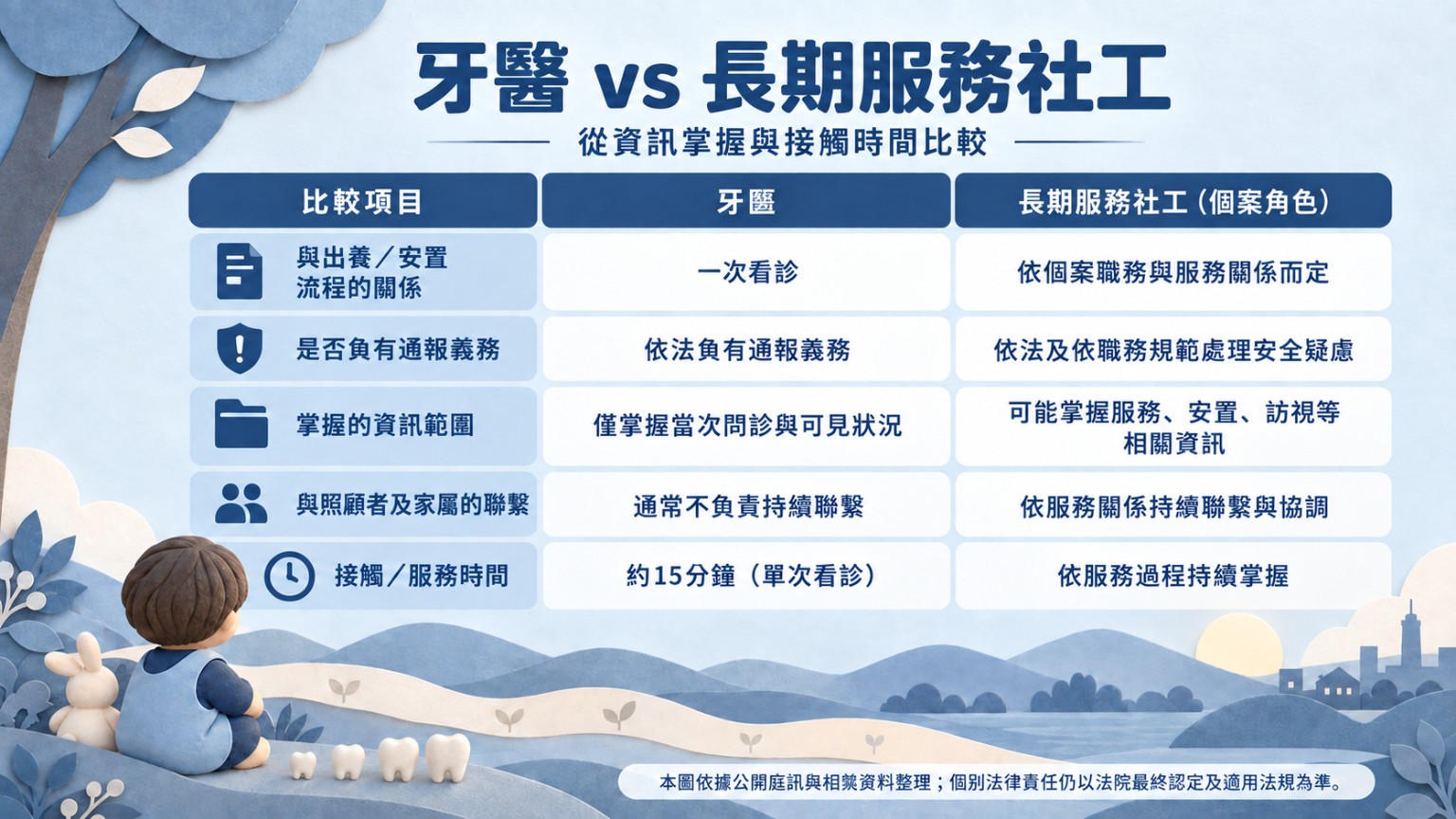
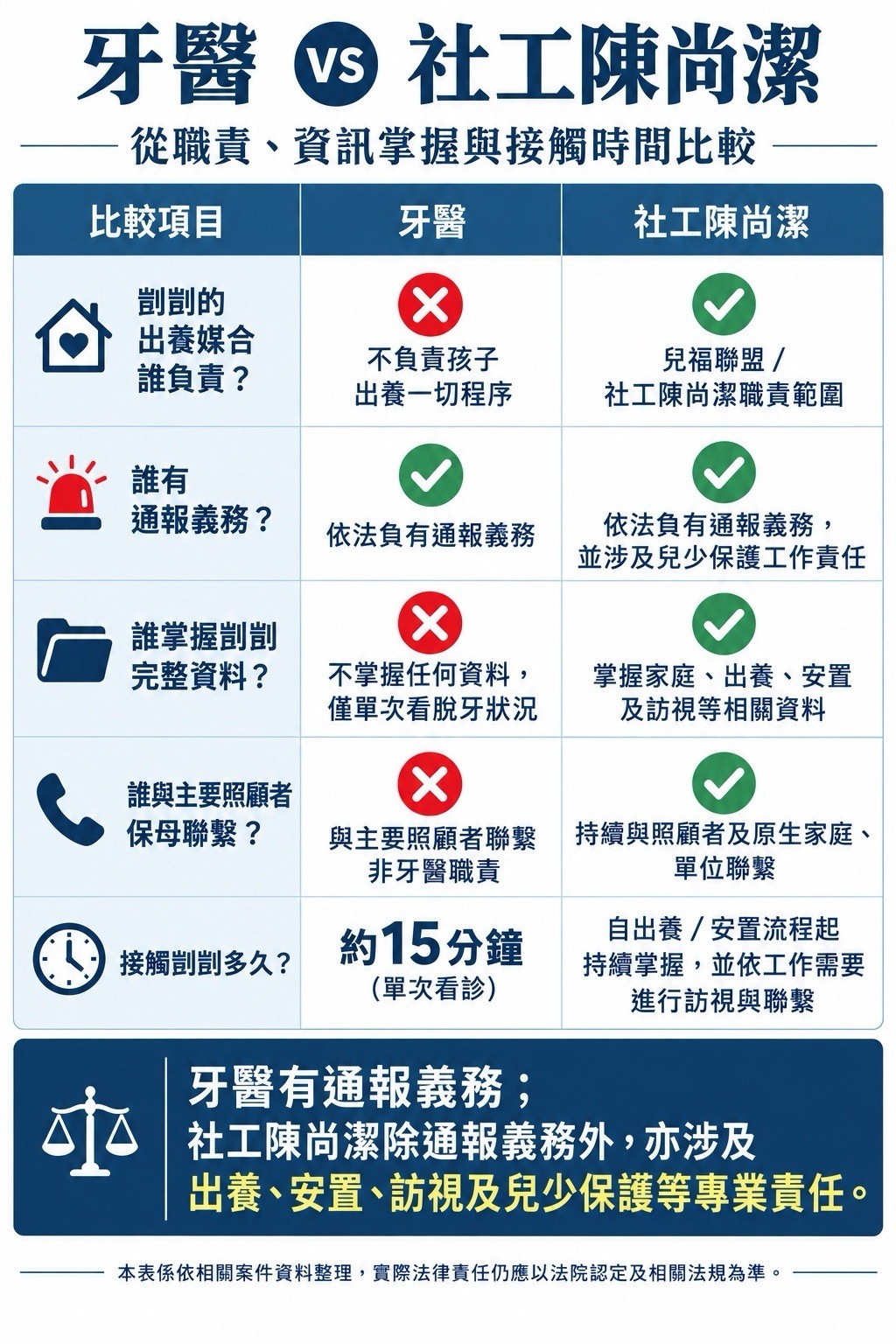
The dentist had the oral condition visible during one consultation, the caregiver's explanation at that time, and the subsequent referral advice.
Adoption and placement services involve a longer history covering the birth family, matching, placement and care conditions. The division of roles does not necessarily determine legal responsibility, but the amount of information, ability to verify it and escalation pathways should all be examined specifically.
Whether the dentist should have reported is open to discussion. At the same time, scrutiny cannot bypass staff who held information over time, could contact the caregiver and family, and could activate internal organizational support and coordination across systems.
“The caregiver deceived us” is not an answer that ends scrutiny.In the child safety net, what matters is whether every warning is rechecked and escalated until the child receives effective protection.
This timeline uses testimony, messages and related statements presented in public hearings as leads; it does not treat disputed matters or matters awaiting judicial determination as established facts. If judgments, full verbatim records or official documents are updated, this account will be revised against the original material.